What is HEMA in Nail Polish? Hidden Science & Safety Guide
HEMA in Nail Polish; Hidden Science, Safety Guide & User Awareness
The rise of at-home gel manicures has changed how we do our nails. But it has also brought a hidden risk to our doorsteps. If you have browsed Reddit threads or Instagram lately, you have likely seen the term HEMA-Free nail polish.
Table of Contents
What is HEMA in Nail Polish?
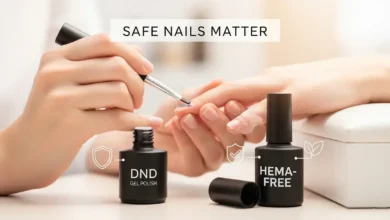
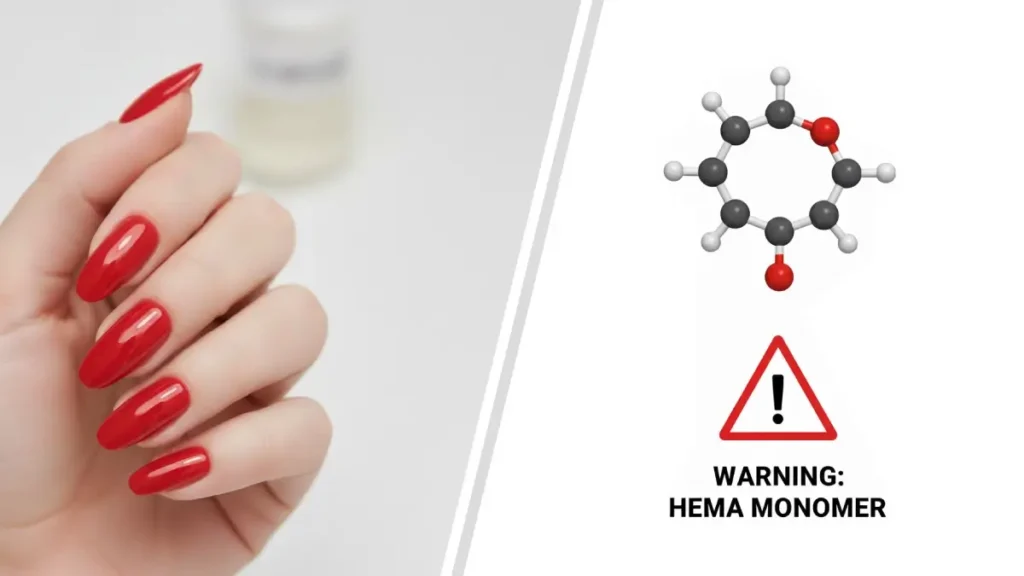
HEMA (2-Hydroxyethyl Methacrylate) is a small-molecule monomer used in gel polish to help it stick to the nail and harden under UV/LED light. While effective for adhesion, it is the number one cause of allergic reactions in nail products.
In 2026, the nail industry is moving away from this chemical. Why? Because thousands of people are developing permanent allergies. This guide will explain why HEMA in gel polish is bad for some, the difference between HEMA vs. HEMA-free, and how to protect yourself.
Meet the Experts: The Science of Nail Safety
To understand this topic, we must look at the experts. Dr. Doug Schoon is the leading voice here. He is a world-renowned scientist and the author of Nail Structure and Product Chemistry. His research through Schoon Scientific and the Nail Manufacturers Council (NMC) is the gold standard.
Medical experts are also worried. The British Association of Dermatologists (BAD) has conducted major studies (2018-2024). They found an “allergy epidemic” caused by methacrylates. This isn’t just a beauty trend; it’s a medical concern.
The Chemistry: Why Is HEMA in Your Polish?
Many people ask, is HEMA in regular nail polish? Usually, no. It is mostly found in gel products. What is HEMA chemical exactly? It is a monomer—a tiny building block.
- Adhesion Power: HEMA is like “super glue.” It helps the gel bond to the natural nail.
- The Curing Process: When you use a UV/LED lamp, a process called polymerization happens. The liquid monomers (HEMA) turn into solid chains called polymers (Poly−HEMA). For specialized products, precision is key—understanding how to use cat eye nail polish correctly ensures the particles stay in place while the gel cures fully under the lamp.
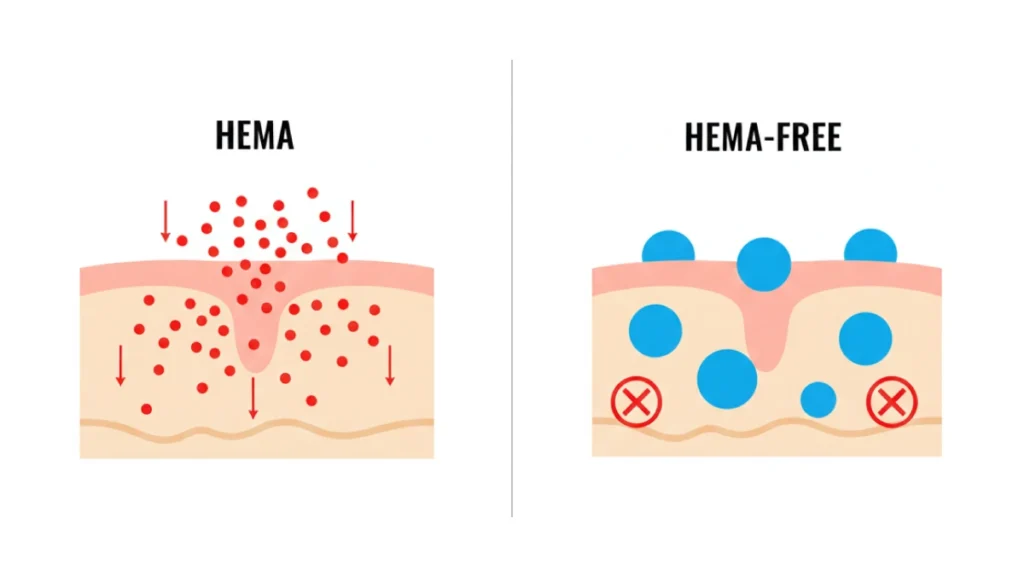
- Molecular Size Matters: HEMA is a “small molecule.” Think of it like sand. Because it is small, it can easily slip through skin pores. Larger molecules, like Di-HEMA, are more like pebbles—they are too big to enter the skin easily.
The Dark Side: Allergies and Sensitization
If you search for “what is HEMA allergy,” you will see scary pictures. This is called Contact Dermatitis.
Common Symptoms:
- Redness and itching around the cuticles.
- Tiny blisters.
- Onycholysis: This is when the nail plate actually lifts off the finger. Often, this damage is triggered by improper removal of enhancements. To prevent such trauma to your natural nails, always follow the safest way to remove acrylic nails at home rather than peeling them off.
The “Lifetime” Warning: Dr. Doug Schoon warns that once you are allergic to HEMA, you are allergic for life. This is serious because HEMA is also used in:
- Dental fillers.
- Bone cement for hip replacements. If you develop an allergy to a $10 bottle of polish, you might face risks during surgery later in life.
Industry Trends: The HEMA-Free Revolution
In 2026, the market has split. We now have Professional-only HEMA and Consumer-Safe HEMA-Free products.
What is HEMA-Free? It means the product uses larger molecules that cannot enter the skin. What is TPO in nail polish? TPO (Trimethylbenzoyl Diphenylphosphine Oxide) is another chemical being watched. In 2026, many brands are removing TPO along with HEMA to create “Hypoallergenic” formulas.
This safety trend is now available in every popular shade, from bold neons to the serene and trending periwinkle nail color, allowing for stylish yet reaction-free manicures.
| Feature | Standard HEMA Polish | HEMA-Free Gel Polish |
|---|---|---|
| Chemical Name | 2-Hydroxyethyl Methacrylate | Larger Monomers (e.g., Di-HEMA) |
| Molecular Weight | Small (Can penetrate skin) | Large (Cannot enter skin) |
| Adhesion Level | Extreme (Sticks to everything) | High (Requires proper nail prep) |
| Allergy Risk | High for DIY users | Very Low / Hypoallergenic |
| Curing Speed | Very Fast | Standard |
| Ideal User | Professional Nail Technicians | DIY Enthusiasts & Sensitive Skin |
How to Identify HEMA in Ingredients
Labels can be tricky. Here is how to spot the HEMA chemical names:
- 2-Hydroxyethyl Methacrylate
- Hydroxyethyl Methacrylate
- HEMA
Checking labels is essential because even professional brands vary in their formulations. Many DIY enthusiasts and professionals often ask, is dnd hema free? Investigating specific brand ingredients is the only way to avoid hidden allergens in your favorite gel colors.
The Myth of “Natural” Gel: Be careful! Some brands claim to be “organic.” However, no gel polish is 100% natural. They all require chemicals to cure. “HEMA-Free” is a safety label, not a “natural” label.
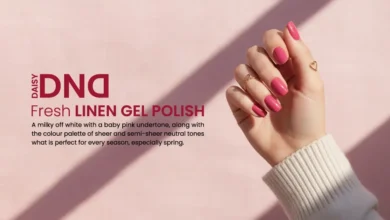
Even popular colors like fresh linen dnd rely on safe chemical polymers rather than organic ingredients to achieve their clean, opaque finish.
Professional Application vs. DIY Risks
Why are DIY users getting more allergies?
- Incorrect Lamps: If your lamp wattage is wrong, the gel only “half-cures.” This leaves liquid HEMA sitting on your nail for days.
- The Inhibition Layer: That sticky layer on top after curing? It is full of unreacted monomers. If you touch it with your skin, you risk an allergy.
To minimize these risks, following a precise application process is vital. For a step-by-step safety guide, you can check our tutorial on how to use dnd duo gel polish to ensure a professional and safe finish at home.
Case Studies: The Allergy Epidemic
The 2018 BAD Study was a wake-up call. It showed that thousands of women were developing “life-changing” allergies from home gel kits. In 2025, new clinical trials focus on hypoallergenic alternatives. Dr. Schoon emphasizes that “Proper Cure” is the only way to stay safe if HEMA is present.
Alternatives: What Should You Use?
If you have sensitive skin, you have options:
- HEMA-Free Builder Gel: Great for strength without the risk.
- Dip Powders: Often contain fewer methacrylates, but check the base coat!
- Traditional Polish: The safest option, as it dries by air and contains no monomers.
Finding safe and reliable products can be a challenge. If you are looking for reputable brands like DND that offer professional-grade options, you can search for a dnd nail supply store near me to ensure you are buying authentic products from authorized distributors.
FAQ: Everything You Need to Know
What is HEMA sword fighting?
What is HEMA-plex used for?
Is HEMA-free gel polish better?
What does HEMA-free mean?
Conclusion: Education is Key
HEMA isn’t “evil,” but it is powerful. In 2026, we predict that small-molecule HEMA will be banned from all consumer-grade (DIY) kits.
Final Advice: If you are doing your nails at home, go HEMA-Free. If you go to a salon, ask your tech about their products. As Dr. Schoon says, “Education is more important than the product itself.”
Proper technique is your best defense against sensitization. If you use popular salon brands, understanding details like how long do you cure dnd gel polish is a vital part of that education.
To stay educated on the best products in the market, you can read our in-depth DND Gel Nail Polish Review to see how it stands up against safety and performance standards.